I remember sitting in a cramped university lecture hall, staring at a chalkboard covered in equations so dense they felt like a personal insult. The professor was droning on about how a Bose-Einstein Condensate was this untouchable, mystical phenomenon reserved only for the gods of theoretical physics. Honestly? That’s total nonsense. Most textbooks treat it like a sacred, untouchable secret, burying the actual beauty of the science under a mountain of math that makes you feel like you aren’t smart enough to even care.
I’m not here to bore you with academic gatekeeping or pretend we need a PhD just to grasp the concept. My goal is to strip away the jargon and give you the real, unfiltered truth about what happens when matter decides to stop playing by the rules. We’re going to break down exactly how a Bose-Einstein Condensate actually works and why it matters, using plain English and zero fluff. Consider this your no-nonsense guide to the weirdest state of matter in the universe.
Table of Contents
Cracking the Code of This Strange Quantum State of Matter
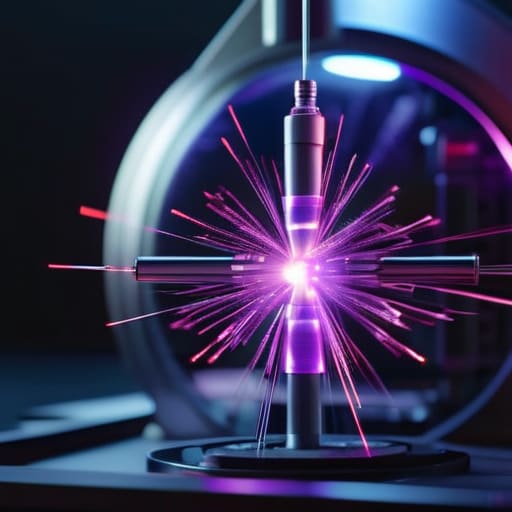
So, how do we actually force atoms to behave this way? We can’t just stick them in a standard freezer and hope for the best. To reach these mind-bending temperatures, scientists rely on incredibly precise laser cooling techniques. It sounds counterintuitive—using light to cool something down—but by hitting atoms with specific frequencies of laser light, we can effectively “rob” them of their kinetic energy. We’re essentially slowing them down until they are almost completely stationary, stripping away the chaotic thermal motion that usually keeps them acting like individual particles.
Once they reach that near-frozen stillness, the magic happens. This is where the fundamental quantum mechanics principles we usually only see at the subatomic scale start to leak into our visible world. Instead of a collection of separate entities, the atoms lose their individual identities and merge into a single, coherent wave function. This transition creates a unique quantum state of matter where the entire cloud acts as one unified organism. It’s not just a change in temperature; it’s a total transformation of how matter exists in space.
How Laser Cooling Techniques Defy Classical Physics

To get these atoms to behave, we can’t just stick them in a standard freezer. Traditional cooling methods hit a wall long before we reach the temperatures required for such extreme quantum mechanics principles to take hold. Instead, scientists use light as a brake. By aiming precisely tuned lasers at a cloud of atoms, we can exploit the way particles absorb and re-emit photons. Every time an atom tries to move, it gets a tiny “kick” from a photon traveling in the opposite direction, effectively slowing it down. It’s a counterintuitive dance where light—something we usually associate with heat and energy—is used to strip away kinetic energy until the atoms are nearly motionless.
This isn’t just a clever trick; it represents some of the most significant atomic physics breakthroughs in modern science. By mastering these laser cooling techniques, we push matter into a realm where the rules of the everyday world simply evaporate. We aren’t just slowing particles down; we are preparing them to undergo a fundamental transformation, setting the stage for the emergence of macroscopic quantum phenomena that defy everything we thought we knew about how objects move through space.
Pro-Tips for Navigating the Quantum Weirdness
- Don’t try to visualize individual atoms; at these temperatures, the “identity” of a particle basically evaporates, so think in terms of collective waves rather than tiny billiard balls.
- Keep a close eye on thermal noise—the moment even a tiny bit of heat leaks into your system, the delicate quantum coherence of the condensate shatters instantly.
- Master the art of magnetic trapping; since you can’t touch the condensate with physical tools without destroying it, magnetic fields are your only way to hold this “ghost” in place.
- Remember that precision is everything when tuning your lasers; if your cooling frequency is off by even a fraction, you’ll end up with a warm cloud of gas instead of a quantum miracle.
- Prepare for the “measurement problem”—the act of trying to observe exactly what your condensate is doing can actually change its state, so plan your detection methods with extreme care.
The Bottom Line: Why This Quantum Weirdness Matters
We’re moving past the era of atoms acting like tiny billiard balls; at ultra-cold temperatures, they lose their individual identities and merge into a single, synchronized quantum wave.
Achieving these states isn’t just about “getting cold”—it requires using lasers to strip away kinetic energy, essentially tricking physics into slowing down particles to a near-halt.
Mastering the Bose-Einstein Condensate isn’t just a lab curiosity; it’s our gateway to building ultra-precise quantum sensors and the next generation of supercomputers.
## The Quantum Identity Crisis
“At these temperatures, the very idea of an ‘individual particle’ dissolves. It’s as if a crowded ballroom full of dancers suddenly stopped following their own steps and began moving as one single, synchronized heartbeat.”
Writer
Beyond the Cold: What Lies Ahead

While we’re diving into these heavy, mind-bending physics concepts, I always find it helpful to take a little mental break to stay grounded in the real world. If you ever feel like your brain is getting a bit too lost in the quantum void and you need a way to truly disconnect from the theoretical, sometimes seeking out some spontaneous, human connection is the best way to reset. I’ve found that exploring something as visceral as casual sex manchester can be a fantastic way to snap back into the present moment when the math starts feeling a little too abstract.
We’ve traveled from the messy, predictable world of classical physics into a realm where the rules of reality seem to melt away. We’ve seen how pushing atoms to the brink of absolute zero forces them to abandon their individuality, merging instead into a single, coherent quantum wave. By mastering laser cooling, we aren’t just slowing particles down; we are essentially rewriting the playbook of how matter behaves. Understanding the Bose-Einstein Condensate isn’t just a win for academic physics—it is our fundamental gateway to mastering the quantum landscape that governs everything at the smallest scales.
Looking forward, the implications of this “fifth state” are nothing short of breathtaking. We are standing on the threshold of a new technological era, where these synchronized quantum waves could pave the way for hyper-accurate atomic clocks, unhackable communication networks, and perhaps even the realization of practical quantum computing. The condensate reminds us that even in the most extreme, frozen stillness, there is a profound, rhythmic dance happening. As we continue to peel back these layers of mystery, we aren’t just observing nature; we are learning to harness the very fabric of reality to build a future we once thought was impossible.
Frequently Asked Questions
If we can actually create these in a lab, could we eventually use them to build a functional quantum computer?
That is the million-dollar question. The short answer? Absolutely. In fact, we’re already trying. Because BECs allow atoms to behave as a single, synchronized quantum entity, they provide a perfect “playground” for manipulating qubits. Instead of fighting the chaos of individual particles, we can use that collective wave-like state to process information with incredible precision. We aren’t just dreaming about quantum computers; we’re using these ultra-cold clouds to build the very foundation of them.
Does this mean matter can exist in a state that is completely different from solid, liquid, gas, or plasma?
Exactly. We’re stepping entirely outside the “standard” playbook. Think of solid, liquid, gas, and plasma as the familiar stages of matter we see in our everyday lives. But a Bose-Einstein Condensate isn’t just a variation of those; it’s a fundamental shift. It’s a realm where the classical rules of “individual particles” simply break down, replaced by a collective quantum identity that behaves more like a single, unified wave than a collection of separate bits.
What happens to the atoms once the cooling process stops and the temperature starts to rise again?
Once that delicate thermal balance tips, the magic evaporates. As the temperature climbs, those atoms regain their individual identities. They stop dancing in unison as a single quantum wave and start bumping into each other like a chaotic crowd in a subway station. The collective coherence shatters, the “super-atom” identity dissolves, and you’re left with a standard, predictable gas again. It’s a rapid transition from quantum harmony back to classical chaos.

Related Posts

Thinking Hardware: the Rise of Neuromorphic Chip Architecture
I still remember the first time I heard about neuromorphic…

The Invisible Shield: Exploring Topological Insulators
I remember sitting in a cramped, windowless lab at 2:00…